|
|

楼主 |
发表于 2010-3-10 00:04:45
|
显示全部楼层
part 2
With the advent of the space era, Liepmann’s interests moved toward o-hydrodynamics and rarefied gas dynamics. In the early 1960s he worked with Moustafa Chahine and me on the structure of a shock layer, using the Bhatnagar-Gross-Krook model within the shock. That work provided the first solutions that spanned the whole range of flow regimes from the continuum limit to large departures from local equilibrium. Liepmann’s later studies included the fluid dynamics of liquid helium.
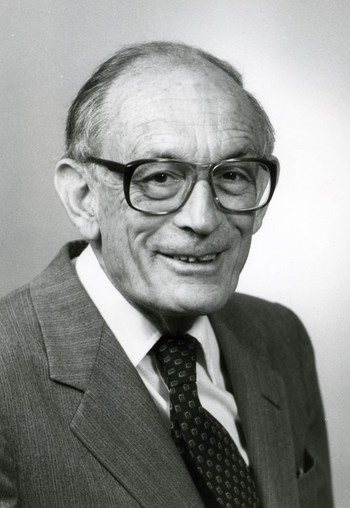
From his unpaid postdoctoral beginnings at Caltech in 1939, Liepmann became a professor in 1949 and director of GALCIT from 1970 to 1985, when he formally retired as Theodore von Kármán Professor of Aeronautics. During his time as director, GALCIT emerged as the liveliest center in the world for basic fluid-dynamics research with a distinctive aerospace flavor.
Liepmann’s teaching was legendary at Caltech. His enthusiasm, ability to make nonobvious connections, and insistence on teaching without notes—except for a few “emergency” index cards carried in his pocket—made his classes very special. With Allen Puckett he wrote the path-breaking Introduction to Aerodynamics of a Compressible Fluid (Wiley, 1947). A more formal and definitive volume, The Elements of Gasdynamics, coauthored with Roshko (Wiley, 1957), taught the subject to generations of young students across the world. He also wrote some very readable short reviews that reflected his own incisive views of a subject; an excellent example is “The Rise and Fall of Ideas in Turbulence,” published in 1979 in American Scientist. More than 60 PhD students carried some of the spirit of Liepmann’s approach to fluid dynamics across the US and around the world.
Liepmann loved to tell stories about both big and small people from all over the world. His famous wit owed part of its charm to phrases lifted from “proper” English, delivered in a thick German accent. I recall his shouting down the corridor at a retreating student, “Have fun!” (But he also meant “Better work hard.”) He had strong likes and dislikes within and outside science. Among his favorite global leaders was the unlettered, tough, liberal-eclectic Mughal emperor Akbar the Great; we once went together to see Akbar’s failed capital near Agra, India, to the utter disgust of our taxi driver at being unable to persuade his “ignorant” customers to see the nearby Taj Mahal instead.
Among the numerous honors Liepmann received were the 1968 Ludwig Prandtl Ring of the German Society for Aeronautics and Astronautics, the 1986 Daniel Guggenheim Medal, the 1986 National Medal of Science, and the 1993 National Medal of Technology.
The world of fluid dynamics will miss a respected figure with a sharp mind, who looked at the subject with the critical eyes of both physicist and engineer, upheld the highest standards of research, and inspired hundreds of students to investigate the basic fluid flow problems that lurked behind modern aerospace technology. |
|


 IP卡
IP卡 狗仔卡
狗仔卡 发表于 2010-3-10 00:03:05
 提升卡
提升卡 置顶卡
置顶卡 沉默卡
沉默卡 喧嚣卡
喧嚣卡 变色卡
变色卡 显身卡
显身卡 发表于 2010-3-10 12:52:56