|
|
 发表于 2011-8-24 10:33:57
|
显示全部楼层
发表于 2011-8-24 10:33:57
|
显示全部楼层
7.19.6 User Inputs for Porous Media
In 3D there are three possible categories of coefficients, and in 2D there are two:
In the isotropic case, the resistance coefficients in all directions are the same (e.g., a sponge). For an isotropic case, you must explicitly set the resistance coefficients in each direction to the same value.
When (in 3D) the coefficients in two directions are the same and those in the third direction are different or (in 2D) the coefficients in the two directions are different, you must be careful to specify the coefficients properly for each direction. For example, if you had a porous region consisting of cylindrical straws with small holes in them positioned parallel to the flow direction, the flow would pass easily through the straws, but the flow in the other two directions (through the small holes) would be very little. If you had a plane of flat plates perpendicular to the flow direction, the flow would not pass through them at all; it would instead move in the other two directions.
In 3D the third possible case is one in which all three coefficients are different. For example, if the porous region consisted of a plane of irregularly-spaced objects (e.g., pins), the movement of flow between the blockages would be different in each direction. You would therefore need to specify different coefficients in each direction. |
|


 IP卡
IP卡 狗仔卡
狗仔卡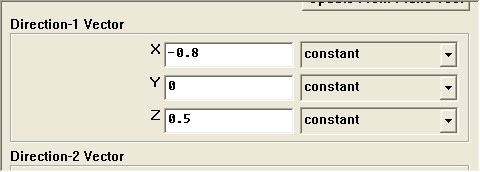
 提升卡
提升卡 置顶卡
置顶卡 沉默卡
沉默卡 喧嚣卡
喧嚣卡 变色卡
变色卡 显身卡
显身卡 发表于 2011-8-23 11:45:35
 楼主
楼主